


Bachelor of Science in Mechanical Engineering (BSME) Degree
What Is a Mechanical Engineering Degree?
A mechanical engineering degree teaches students to apply mathematics, physics and engineering principles to the design, analysis and improvement of machines, mechanical components and energy systems. GCU's Bachelor of Science in Mechanical Engineering (BSME) is an on-campus program that applies these concepts through coursework and hands-on laboratory learning.
Developed with industry guidance, GCU's BSME combines foundational engineering coursework with hands-on laboratory experience. You will use engineering tools and equipment while building skills in analysis, design and the application of mechanical systems and manufacturing processes.

Campus: $8,250 per semester [More Info]
Up to 90 credits, only 84 can be lower division
Credits: Fill out the Lopes Eval to find out what will transfer
Admission Requirements (Bachelor's)
- 16+ years old
- High School Graduate
- 2.8+ Unweighted GPA
OR 2.5+ Unweighted GPA and
- ACT: 19
- SAT: 1000*
Admission requirements may differ based on degree level, program and modality, or transfer status. Some programs of study may require a higher GPA and/or other qualifying criteria for admission. Please review full admission and program requirements in the University Policy Handbook.
*Math and reading only on a 1600 point scale (test date after 3/1/2016). SAT score of 1380 required for 2400 point scale (test date before 3/1/2016).
What Can You Expect From GCU's Mechanical Engineering Degree Program?
The BSME combines mathematics, physics, chemistry, computer programming and engineering coursework with hands-on laboratory learning. You will study mechanical engineering concepts while developing problem-solving, critical-thinking and technical skills.
Coursework also introduces manufacturing processes and engineering economics, giving students experience with both the technical and practical considerations involved in engineering projects.

What Is the BSME Degree Experience at GCU?
Study Engineering at an Accredited University
GCU has been institutionally accredited by the Higher Learning Commission since 1968. The College of Engineering and Technology shares the university’s commitment to upholding the principles and standards established by our accrediting bodies.
What Is It Like To Study Mechanical Engineering at GCU?
The BSME is offered on campus, where you can participate in face-to-face class discussions, hands-on laboratory activities and collaborative engineering projects. This setting allows you to apply mechanical engineering concepts through practical work while engaging directly with faculty and peers.
As a Christian university, GCU also integrates its Christian worldview into academics and campus life. Outside the classroom, you can participate in worship, service, community outreach and other student activities as part of a campus experience focused on learning, purpose and service.

Use Engineering Labs and Manufacturing Equipment
GCU's 162,653-square-foot engineering building includes 21 classroom labs. You will have access to resources, including tech equipment such as 3D printers, laser cutters and CNC routers, beginning in your freshman year, allowing you to turn engineering concepts into physical designs and prototypes.
Hear From a Mechanical Engineering Student

"We actually have a CAD design in class here and that really prepared me for the position that I’m in because it’s given me that hands-on experience."
"We actually have a CAD design in class here and that really prepared me for the position that I’m in because it’s given me that hands-on experience."
What Will I Study in Mechanical Engineering Courses?
As a mechanical engineering student, you will study how materials, forces, energy, heat and mechanical systems behave and how those concepts are applied in engineering design. Coursework covers areas such as materials science, thermodynamics, heat transfer, mechanical systems, controls and manufacturing.
The curriculum also incorporates engineering ethics and servant leadership within GCU's Christian educational framework.
Course Topics in a Mechanical Engineering Degree
Mechanical engineering coursework covers how materials, energy and integrated systems behave and function in engineering applications.
Core topics you will study include:
Materials science
Study material properties and structures at the atomic and molecular level
Thermodynamics
Explore ideal gases, water vapor, thermodynamic cycles, refrigeration, entropy and reacting mixtures
Heat and mass transfer
Examine conduction, convection, radiation and introductory mass-transfer concepts
Mechanical systems integration
Study technical planning, requirements, integration, verification, validation and production of machine systems
Mechatronics and controls
Explore the integration of mechanical and electrical systems, including measurement, sensors, controllers and feedback control
What Mechanical Engineering Emphasis Areas Does GCU Offer?
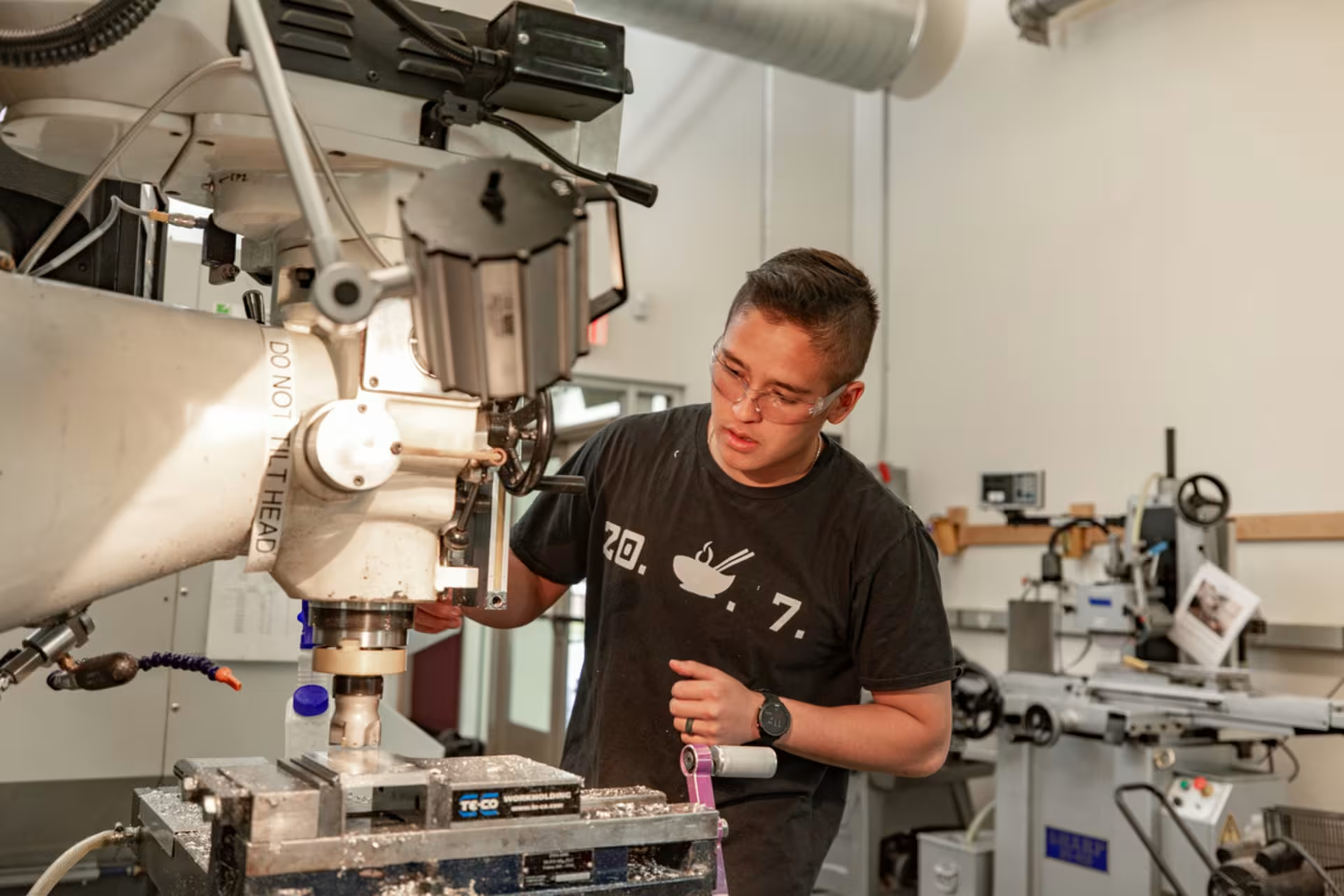
If you are interested in specializing your studies, you can explore GCU mechanical engineering options in aerospace, facilities engineering and robotics.
Aerospace
Facilities Engineering
Robotics
What Can You Do With a Mechanical Engineering Degree?
Mechanical engineering graduates may pursue work involving the design, testing, manufacturing and operation of mechanical products and systems.(See disclaimer 1,2) Mechanical engineers work across industries including manufacturing, engineering services, research and development, robotics, automotive, energy and aerospace.(See disclaimer 3) Depending on the role, some career paths may require additional education, experience or licensure.(See disclaimer 4)
Career paths related to a mechanical engineering degree may include:(See disclaimer 1)
Mechanical engineering
Design, develop and test mechanical devices, components and systems used across a range of industries.
Cost estimating
Analyze project requirements to estimate the time, materials, labor and costs needed to complete a project.
Aerospace engineering
Design, develop and test aircraft, spacecraft and related components and systems.
Infrastructure management
Support the planning, operation and maintenance of facilities, equipment and infrastructure systems.
Estimated job growth for mechanical engineers from 2025 to 2035(See disclaimer 5)
Median annual wage for mechanical engineers as of May 2025(See disclaimer 6)
Mechanical Engineering Degree Tuition and Financial Options
Tuition for GCU's campus-based BSME depends on the applicable campus tuition rate and a student's individual financial circumstances. You can review current tuition, scholarships, grants and financial-planning resources through GCU's tuition and financial aid pages.

GCU has not increased campus tuition rates since 2009
Ways To Save
Your education is an important financial investment, and there are several ways to help manage costs while earning your degree. GCU’s university counselors are available to help you explore available options and provide personalized guidance on your estimated cost of attendance.
Complete the Free Application for Federal Student Aid (FAFSA) annually to determine eligibility for federal grants and student loans. Since some aid is awarded on a first‑come, first‑served basis, GCU recommends submitting the FAFSA as early as possible after Oct. 1 to maximize funding opportunities.
If you’ve earned college credits from another institution, you may be able to complete your degree sooner at GCU by transferring those credits. Submit the Lopes Unofficial Credit Evaluation form, then connect with a university counselor who can provide you with personalized guidance.
You may be able to reduce your college costs by applying for GCU’s on-campus or online student scholarships. We invite you to explore available institutional scholarships and determine which opportunities you may be eligible for. GCU also encourages students to seek out third‑party scholarships and grants.
Explore Your Financial Options
Connect with a university counselor to learn more about tuition, cost-planning resources and available options.
Bachelor’s in Mechanical Engineering Degree FAQs
Explore answers to common questions about mechanical engineering education, careers, skills and related engineering fields.
Do you need a bachelor’s degree to be a mechanical engineer?
What industries do mechanical engineers work in?
What is the difference between mechanical engineering and mechanical engineering technology?
What skills do mechanical engineers need?
What is the difference between mechanical engineering and electrical engineering?
Can mechanical engineers work in aerospace?
What Are the Admission Requirements for GCU’s BSME Program?
GCU offers a streamlined admission process with no application fee, personal statement or essay required. High school students may qualify for admission by meeting either the minimum GPA requirement or minimum SAT or ACT test score requirements. Admission criteria may vary by degree or program, so please review the requirements for your chosen program.
You can apply to a degree program at GCU in just three simple steps. Your university counselor is standing by to assist you with any questions about the application process.
It starts with selecting the program that aligns with your goals from one of GCU's 380+ academic programs — from undergraduate degrees to post-master’s certificate programs to doctoral degrees.
Pick your program
Explore our on-campus, online or evening cohort options under the Degree Programs page to find the right program for you.
Complete our online application
Your university counselor will direct you to the online application. Fill in all required information and submit the form.
Submit supporting documents
Submit your official transcripts and any relevant test scores, and confirm with your university counselor that all forms for your desired program are submitted.
Program Curriculum
General Education Requirements
Required General Education Courses
Core Courses
Read More about Mechanical Engineering
Explore more about mechanical engineering, from career paths and industry trends to emerging technologies shaping the field.
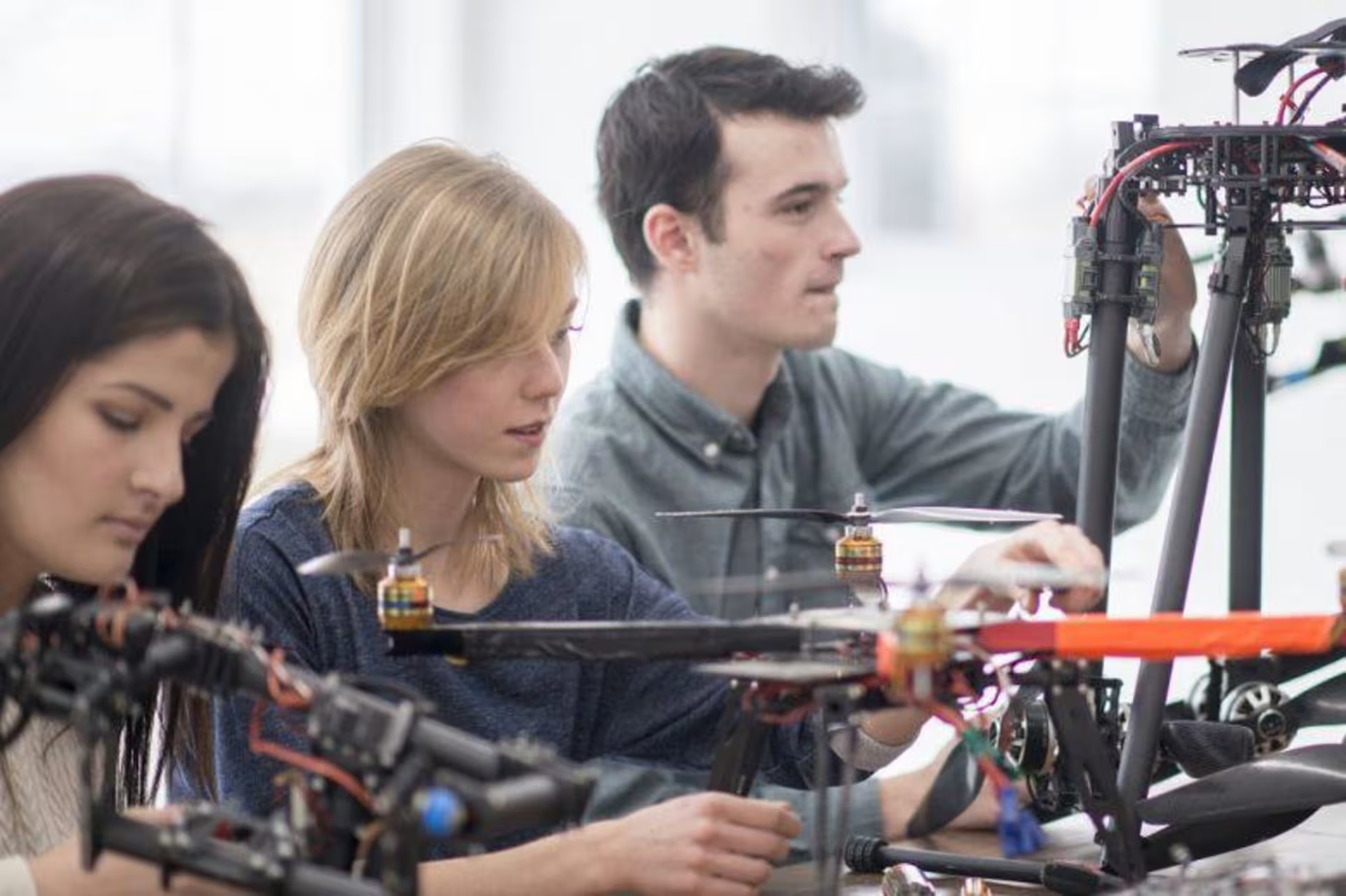




Develop practical engineering skills through hands-on labs, collaborative projects and an on-campus learning experience designed to prepare you for opportunities in the field.
- Career Explorer. (2026). What Does a Mechanical Engineer Do? Retrieved August 2026.
- U.S. Bureau of Labor Statistics. (2026, Aug. 27). What Mechanical Engineers Do. Occupational Outlook Handbook. Retrieved September 2026.
- U.S. Bureau of Labor Statistics. (2026, Aug. 27). Mechanical Engineers: Work Environment. Occupational Outlook Handbook. Retrieved September 2026.
- U.S. Bureau of Labor Statistics. (2026, Aug. 27). How To Become a Mechanical Engineer. Occupational Outlook Handbook. Retrieved September 2026.
- Data shown is effective August 2026, which can be found here: U.S. Bureau of Labor Statistics, Occupational Outlook Handbook, Mechanical Engineers, retrieved September 2026.
- The earnings referenced were reported by the U.S. Bureau of Labor Statistics (BLS), Mechanical Engineers as of May 2025, retrieved September 2026. BLS calculates the median using salaries of workers nationwide with varying levels of education and experience. It does not reflect the earnings of GCU graduates as mechanical engineers, nor does it reflect the earnings of workers in one city or region of the country or a typical entry-level salary. Median income is the statistical midpoint for the range of salaries in a specific occupation. It is very unlikely that a median salary will reflect an entry-level salary. It represents what you would earn if you were paid more money than half the workers in an occupation, and less than half the workers in an occupation. It may give you a basis to estimate what you might earn at some point if you enter this career. Grand Canyon University can make no guarantees on individual graduates’ salaries. Your employability will be determined by numerous factors over which GCU has no control, such as the employer the graduate chooses to apply to, the graduate’s experience level, individual characteristics, skills, etc. against a pool of candidates.
- ABET. (2021). What Programs Does ABET Accredit? Retrieved August 2026.
Approved and verified accurate by the Assistant Dean of the College of Engineering and Technology on Sept. 25, 2026.